
Potty Training Regression: Why It Happens and What to Do

A toddler who was doing great and suddenly has accidents is very common. Regression is usually temporary and often tied to a change in life.
Common triggers
- New sibling, move, new daycare or travel
- Illness or constipation
- Busy play (toddlers ignore the signal)
- A power struggle at the potty
What to do
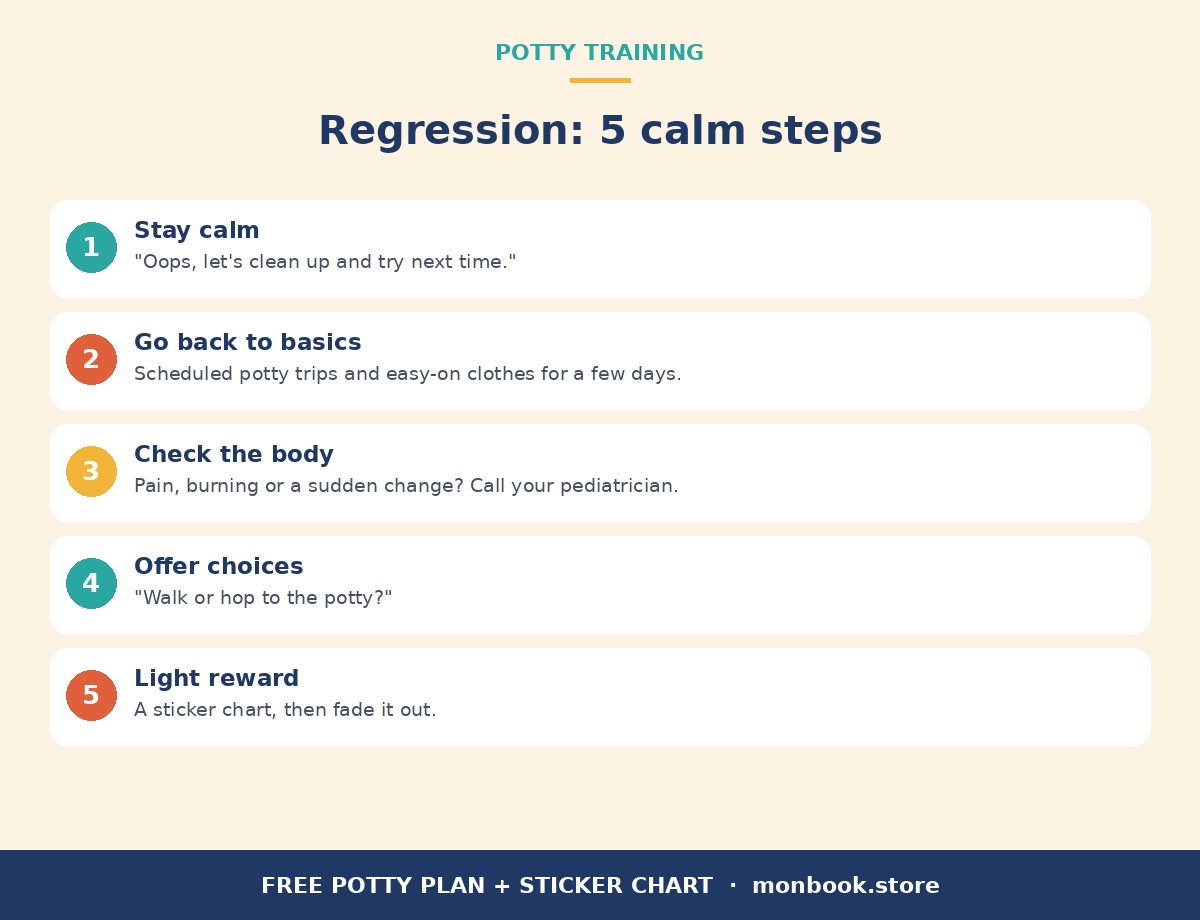
1. Stay calm. Reactions make it bigger. Say "Oops, let's clean up and try next time." 2. Go back to basics for a few days. Scheduled potty trips, easy-on clothes, a reminder routine. 3. Check the body. Painful pooping, burning with pee or a sudden change in thirst are reasons to call your pediatrician. 4. Give choices, not orders. "Do you want to walk or hop to the potty?" 5. Use a light reward like a sticker chart, then fade it.
How long does it last?
Often days to a couple of weeks. If it keeps going or you're worried, ask your pediatrician.
FAQ
Should I go back to diapers?
Usually not for the daytime. Keep underwear and add more trips. Use pull-ups only for naps or nights if needed.
Is regression my fault?
No. It's a normal part of learning.
Related: 7 Potty Training Mistakes. Printable chart: free potty guide.
General information, not medical advice. Talk to your pediatrician about your child's individual needs.
Keep reading
 Potty Training Guide: Start to Finish for ToddlersAll our articles on this topic in one place.Potty Training in 3 Days: How the Method WorksHow the 3-day potty training method works for toddlers: readiness signs, a day-by-day plan, naps and nights, and what to do when it doesn't click.
 Nighttime Potty Training: What to Expect and WhenWhen do toddlers stay dry at night? Signs of readiness, what helps, and why night training lags behind daytime. Realistic, no-pressure tips for parents.
 Why Spring Is a Good Time to Potty TrainWhy many parents find spring easier for potty training: lighter clothes, longer days and outdoor time. A simple 4-step spring plan, no pressure.