
Potty Training in 3 Days: How the Method Works

The 3-day method is a focused weekend of near-constant practice: no diapers, lots of fluids, frequent potty trips, and your full attention. It works for many toddlers, but "3 days" means the core habit gets started. Accidents will still happen for weeks.
Is my toddler ready?
Readiness matters more than the calendar. Most children show signs somewhere between 18 months and 3 years. Look for:
- Dry for 2 hours or more at a stretch
- Interest in the bathroom or in underwear
- Can follow simple two-step directions ("come here, sit down")
- Tells you, or shows you, when they are wet or about to go
- Can pull pants up and down with a little help
If you see most of these, go ahead. If not, wait a few weeks. Starting too early is the most common reason this feels like a fight. If your child has constipation, pain with pooping, or any medical concern, check in with your pediatrician first.
What to prepare before day one
- A potty seat (floor potty or a seat insert) plus a step stool
- 8 to 10 pairs of easy-on underwear and a stack of towels
- Salty and sweet snacks and plenty of drinks
- A small reward plan (a sticker chart works well)
- A clear weekend: no trips, no visitors, phone away
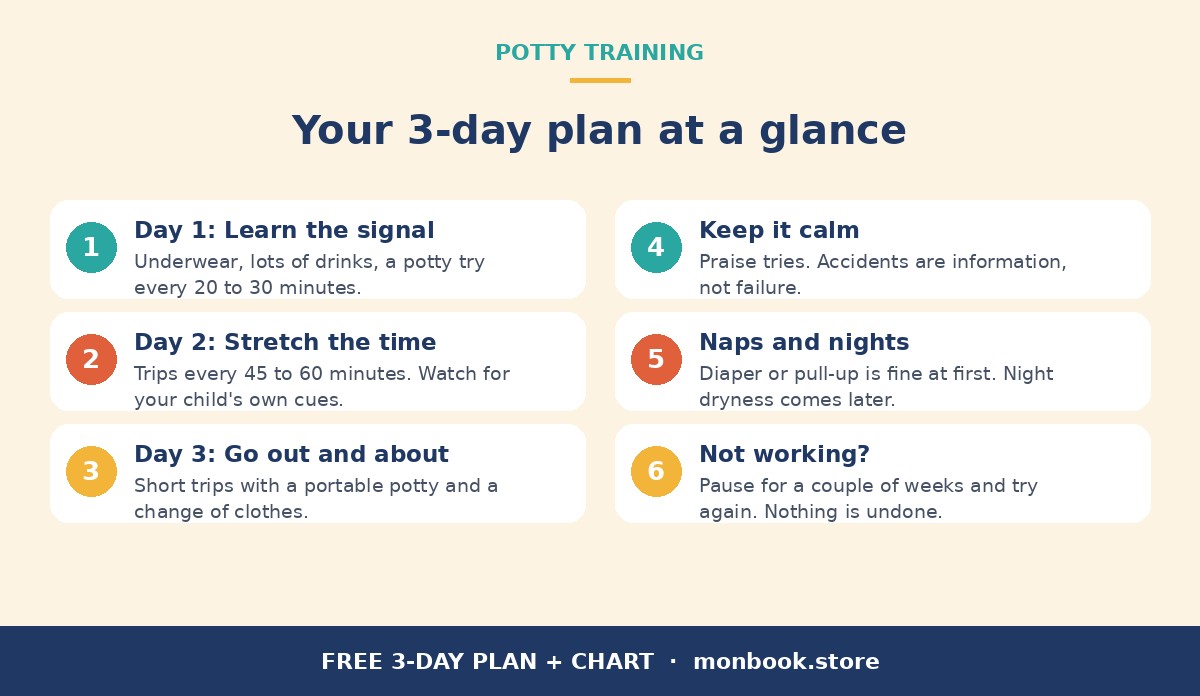
Day 1: Learn the signal
1. Go bottomless or in underwear. Wet feels different from a diaper, and that is the point. 2. Offer drinks often. More pee means more chances to learn. 3. Sit on the potty about every 20 to 30 minutes for a minute or two. Read a short book. 4. Celebrate every success, even a drop. Stay calm for accidents: "Pee goes in the potty. Let's clean up." 5. Skip the questions ("Do you need to go?"). Say "Time to try the potty."
Day 2: Stretch the time
Stretch trips to every 45 to 60 minutes. Start watching for your child's own cues (a pause, a squat, a wiggle) and run to the potty when you see them. Keep praise specific: "You told me!"
Day 3: Go out and about (short trips)
Try a short outing with a portable potty or a known bathroom, and a change of clothes. Expect accidents. They are information, not failure.
Naps and nights
Most families use a diaper or pull-up for naps and nighttime at first. Daytime dryness usually comes first and night dryness often follows weeks to months later, partly because it depends on body development. Don't judge the weekend by the nights.
What if it isn't working?
If your child is upset, resisting, or having zero successes after day 2, stop and pause for a couple of weeks. This is normal and doesn't undo anything. Pressure, punishment and shame make potty training harder. Read next: 7 Potty Training Mistakes and How to Fix Them.
A sample day-one schedule
- 7:30 Wake, potty, breakfast and a big drink
- 8:15 Potty try (1 to 2 minutes, book)
- 9:00 Play near the potty, snack and drink
- 9:30 Potty try
- Continue every 20 to 30 minutes, with a longer try after lunch
- 12:30 Quiet time or nap (diaper or pull-up if you use one)
- 4:00 Last big drink; 6:30 dinner; potty before bath and before bed
Quick answers to common day-one problems
- Lots of accidents: normal. Shorten the time between trips and watch for cues.
- Refuses to sit: let them sit clothed, read a book, or try again in 10 minutes. No forcing.
- Only pees when off the potty: keep the potty in the room you play in.
- Afraid of the flush: flush after they leave.
What the AAP says about readiness
The American Academy of Pediatrics explains that toilet training involves the body and the mind: children need to recognize signals, understand what they mean, and tell you. Waiting until your child is truly ready makes the process smoother. Source: healthychildren.org (AAP) toilet-training pages.
Your potty training shopping list
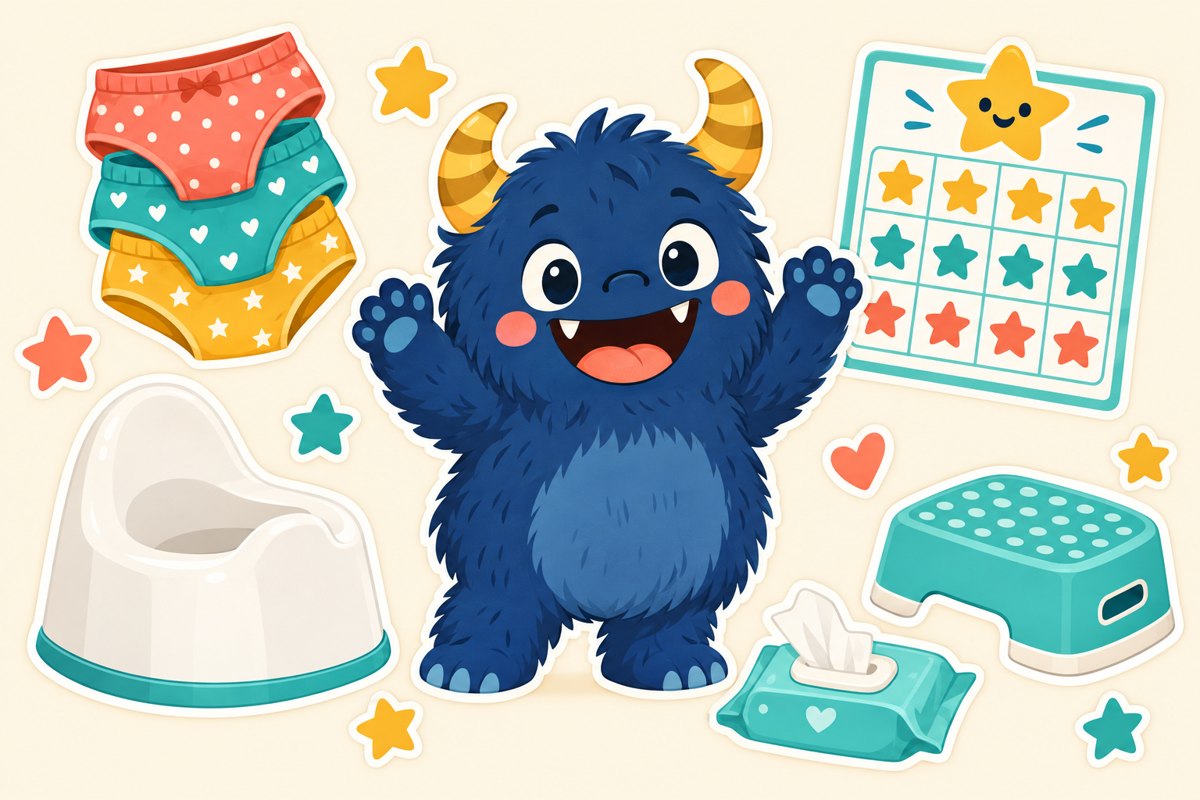
Potty seat or insert, step stool, 8 to 10 underwear, wipes, spare clothes for the car, a timer, stickers.
Frequently asked questions
Does the 3-day method work for every child?
No. Some children get it in a weekend, others need weeks. Readiness and consistency matter more than the exact number of days.
What age should I start?
Many children are ready between about 18 months and 3 years. Go by readiness signs, not age alone.
What about pooping on the potty?
It often comes later than peeing. Many toddlers hold it in at first. Keep it relaxed, offer a seat at the usual time (after meals), and mention it to your pediatrician if it becomes painful or very infrequent.
Should I use rewards?
Small rewards like stickers can help early on. Fade them out as the habit sticks.
Get the full plan
Our free Monbook guide has the printable day-by-day schedule, the 3-day checklist and a sticker reward chart: Download the free potty plan.
This article is general information, not medical advice. Talk to your pediatrician about your child's individual needs.
Keep reading
Potty Training Guide: Start to Finish for ToddlersAll our articles on this topic in one place. Potty Training Regression: Why It Happens and What to DoToddler suddenly having potty accidents again? Common causes of potty training regression, calm steps to get back on track, and when to call a doctor.
 Nighttime Potty Training: What to Expect and WhenWhen do toddlers stay dry at night? Signs of readiness, what helps, and why night training lags behind daytime. Realistic, no-pressure tips for parents.
 Why Spring Is a Good Time to Potty TrainWhy many parents find spring easier for potty training: lighter clothes, longer days and outdoor time. A simple 4-step spring plan, no pressure.