Toddler Speech Milestones by Age (12-36 Months)
Most toddlers say a few words by 15 to 18 months, put two words together by about 2, and by 3 are chatting in short conversations. Every child develops at their own pace, so use these milestones as a conversation starter with your pediatrician, not a test.
The CDC defines milestones as things most children (75% or more) can do by a certain age. ASHA, the speech-language professionals' association, publishes similar ranges. This article summarizes both.
Important: these checklists are not a screening or diagnosis. Your child meeting the milestones does not mean you should stop worrying if something feels off, and missing one does not mean something is wrong. If you're worried at any point, ask your pediatrician. Early help matters, and you don't have to wait.
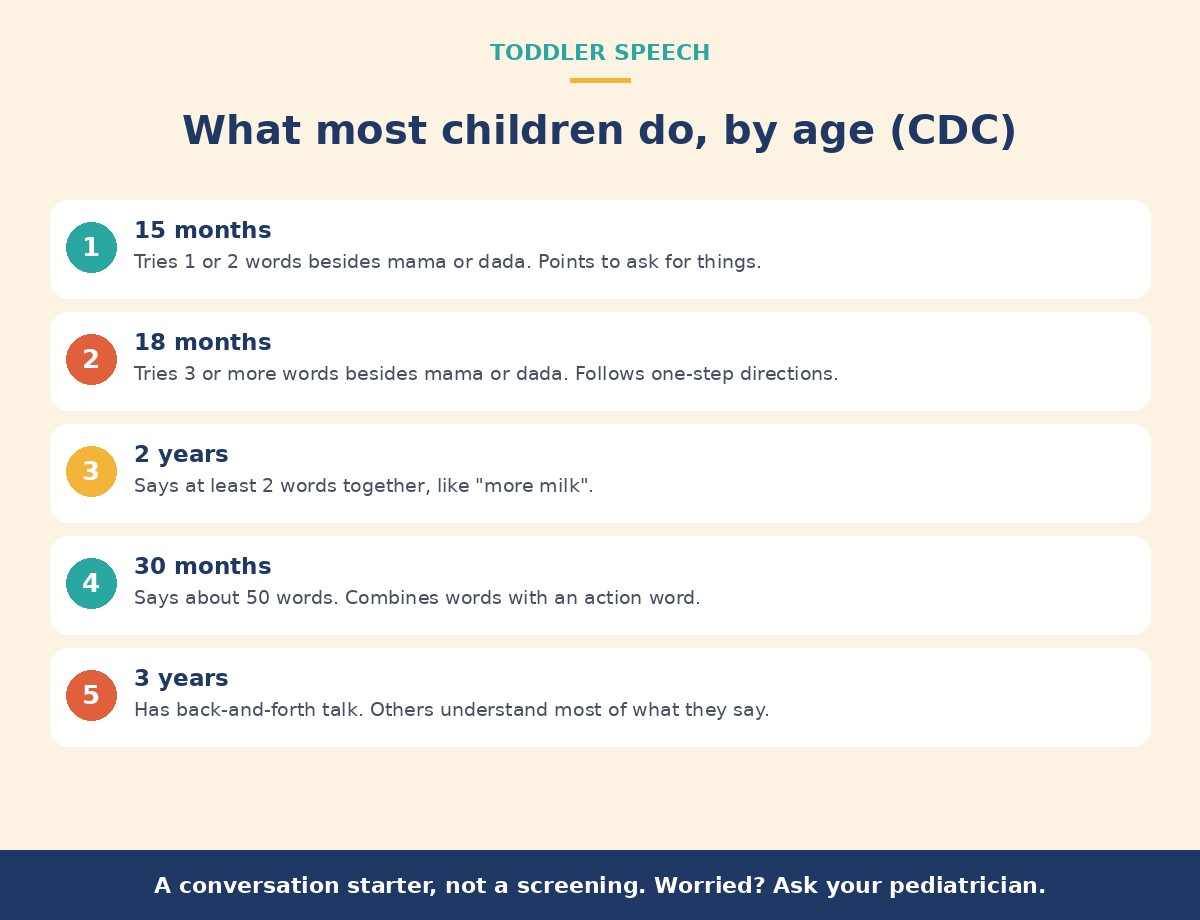
Quick timeline
- 15 months: Tries one or two words besides "mama" or "dada"; looks at a familiar object when you name it; points to ask for something
- 18 months: Tries three or more words besides "mama" or "dada"; follows one-step directions without gestures ("give me the toy")
- 2 years: Says at least two words together ("more milk"); points to things in a book; points to at least two body parts when asked
- 30 months: Says about 50 words; combines words with an action word ("doggie run"); names things in a book; uses "I," "me," or "we"
- 3 years: Has back-and-forth conversation; asks who, what, where, why; says what action is happening in a picture; says their first name; is understood by others most of the time
Source: CDC "Learn the Signs. Act Early." milestone pages.
12 to 18 months: first words and pointing
Babbling turns into real words. ASHA notes that toddlers this age follow simple directions, point to request or comment, shake their head "no," nod "yes," and identify one or more body parts. Words may not sound clear: "ba" for ball is fine.
How to help: name what you see on walks, read short picture books, and wait after you speak so they can answer.
19 to 24 months: words multiply
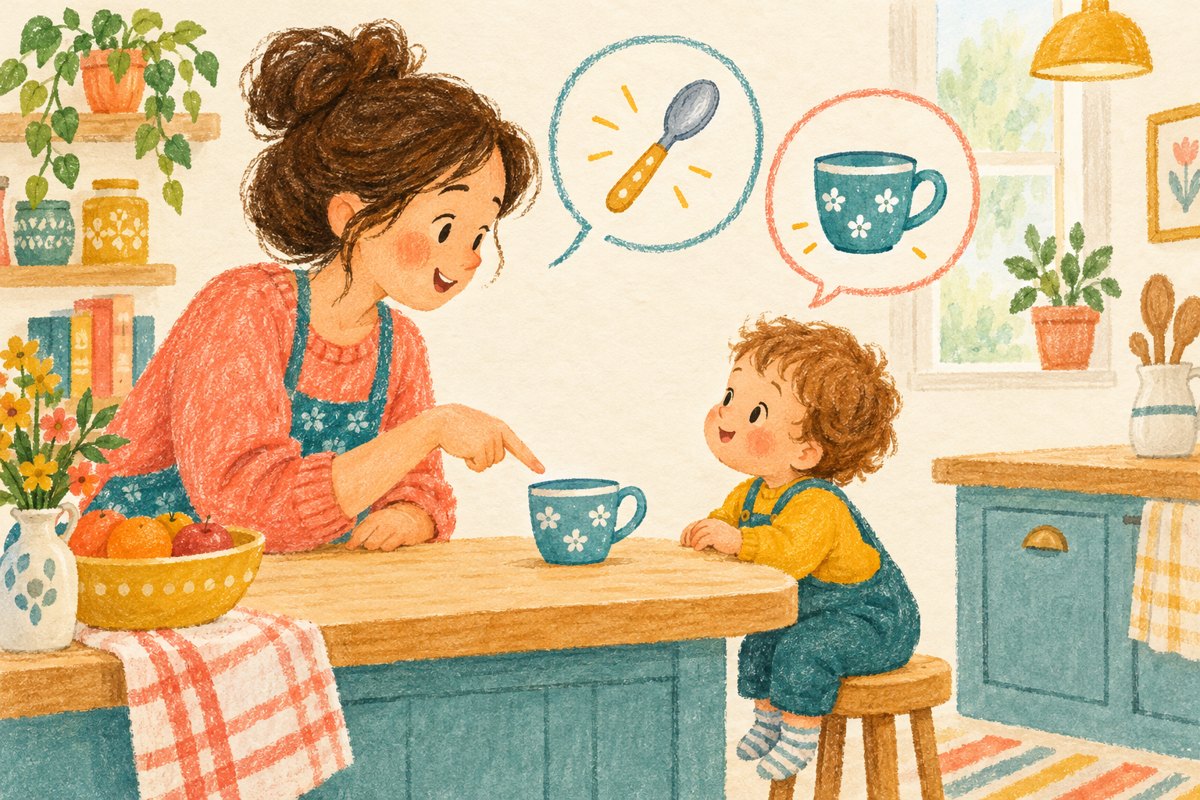
ASHA lists understanding and using at least 50 words and putting two or more words together ("more water," "go outside"). Children this age follow two-step directions like "get the spoon and put it on the table" and start using "me" and "mine."
How to help: expand their words. If they say "car," say "big red car."
2 to 3 years: sentences and questions
Word combinations become frequent. Children start asking "why" and "how," use plurals and "-ing" verbs, and answer simple questions. Speech gets clearer, but ASHA notes it may still be hard for unfamiliar listeners to understand. By 3, the CDC says children talk well enough for others to understand most of the time.
Everyday ways to help your toddler talk
1. Narrate your day in short sentences. 2. Expand and add one word to what they say. 3. Pause 5 seconds and let them fill the silence. 4. Read together daily and point to pictures. 5. Sing songs with actions. 6. Offer two choices and name both. 7. Use the language(s) you're most comfortable with. ASHA says learning more than one language will not cause speech or language problems. 8. Keep background TV off during play and meals.
See also: How to Help Your Toddler Talk.
When to talk to your pediatrician
The CDC says: if your child is not meeting one or more milestones, has lost skills they once had, or you have other concerns, act early. Talk with your child's doctor and ask about developmental screening. The AAP recommends general developmental screening at 9, 18 and 30 months.
Examples that merit a conversation:
- Not saying the words listed for 18 months or not following simple directions
- Not putting two words together by around 2
- Losing words or skills
- Very hard for others to understand around age 3
- Any hearing worry
Read more: Late Talker vs. Late Bloomer.
Frequently asked questions
How many words should a 2-year-old say?
CDC and ASHA do not give one number at exactly 2. ASHA lists at least 50 words by 19 to 24 months, and the CDC lists about 50 words by 30 months. Children vary a lot. If you're worried, ask for a screening.
Does being bilingual cause speech delay?
No. ASHA states that learning multiple languages will not cause speech or language problems.
Does screen time delay speech?
The AAP says higher screen use in young children has been linked with delays in language and social communication. Live back-and-forth talk is what toddlers need most.
Get the milestone checklist
Our free Monbook guide has a printable age-by-age checklist and word lists: Download the free talk guide.
General information, not medical advice. Talk to your pediatrician or a speech-language pathologist about your child.